Rooted in education: How Shadi AbouSamra is cultivating a global movement for healthy buildings
A lead instructor and sustainability educator, Shadi AbouSamra shares how earning the WELL AP credential transformed his teaching, expanded Archiroots' global reach and empowered thousands of professionals to prioritize human health in the built environment.
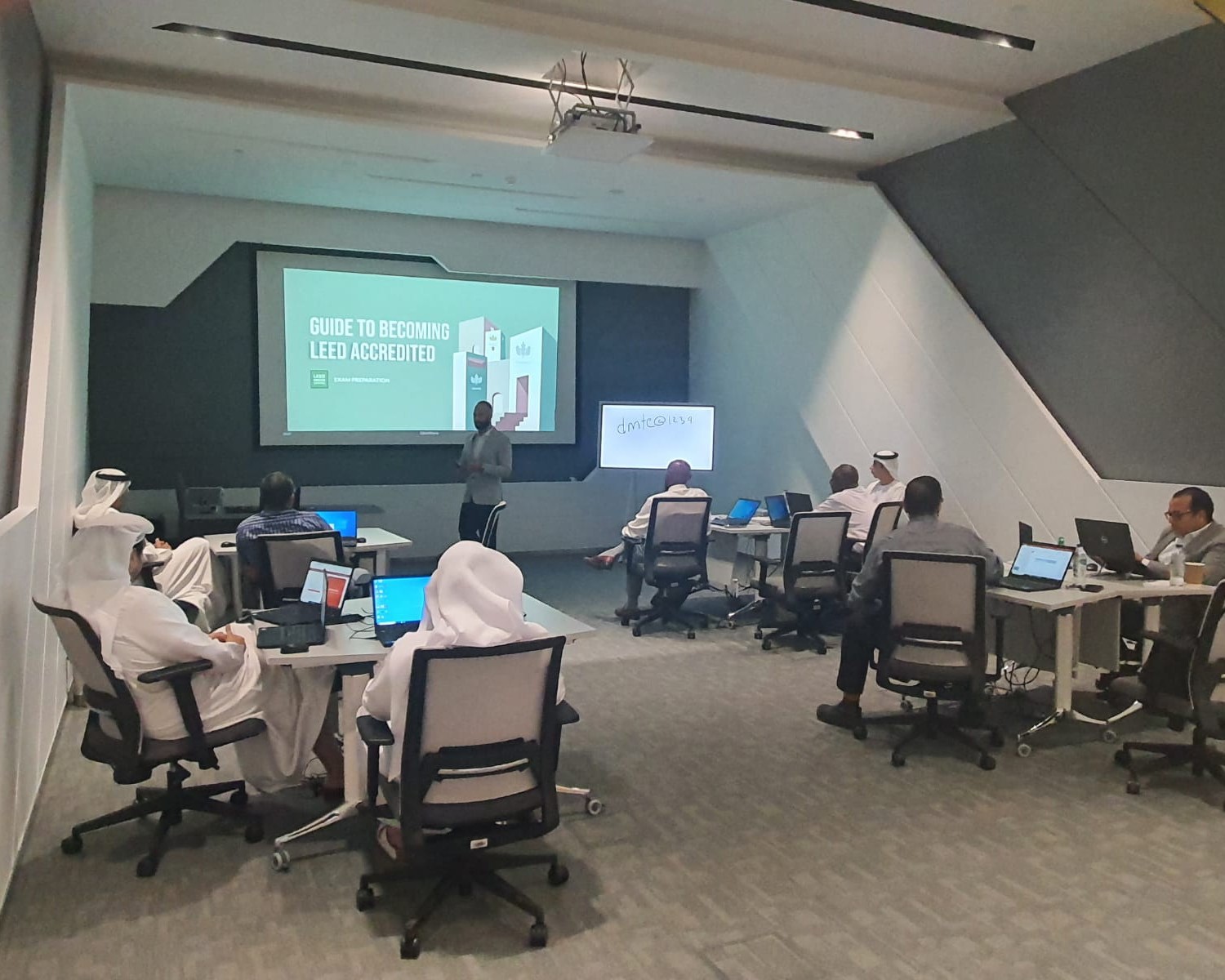
When Shadi AbouSamra first explored the WELL Building Standard, he was already an established LEED educator—but WELL offered a vital shift in perspective, moving from environmental performance to how buildings directly impact human health. Driven to teach the standard with complete integrity, he earned his WELL AP credential and anchored well-being principles into the foundation of Archiroots. Today, as lead instructor, university lecturer and WELL Faculty candidate, Shadi has helped cultivate the careers of over 7,000 professionals across 100 countries. In this Q&A, he reflects on approaches to health education, the growth of sustainable building credentialing and his vision for empowering the next generation of industry leaders.
How did you first hear about the WELL AP? What made you interested in the credential?
I was already a LEED AP BD+C and teaching LEED exam prep to professionals through my platform, Archiroots, when students started asking me about a credential focused on health rather than environmental performance. That sent me down the rabbit hole of the WELL Building Standard. What hooked me was that WELL flips the lens: instead of asking what buildings do to the planet, it asks what buildings do to the people inside them. As an educator, I knew immediately this was a credential I needed to earn myself before I could teach it with integrity.
What’s one way becoming a WELL AP has impacted your life and/or career?
It transformed my career from teaching one rating system to teaching a complete picture of the built environment. Today, thousands of professionals have gone through my WELL AP preparation course at Archiroots, and I’ve had the privilege of supporting institutional clients and universities worldwide. On a personal level, it changed how I set up my own home. With a young baby at home, I now think constantly about air quality, natural light and acoustics in ways I never did before.
What are some things you’ve been able to do (or you plan to do) as a WELL AP you couldn’t before? Why are those things important to you?
The credential gave me the standing to bring WELL education to a region where it deserves far more visibility. I’ve been able to deliver training in partnership with universities and institutions in the Middle East, United States and Europe, to guide professionals from more than 100 countries through their own WELL AP journeys. I’m now working toward WELL Faculty designation so I can deepen that contribution. These things matter to me because I believe access to quality education shouldn’t depend on where you live.
Did anything about the WELL AP process surprise you—from registering for the exam to your experience post-accreditation? What was it? How would you prepare WELL AP candidates for that?
The breadth of the material surprised me most. I expected air quality and water testing. I did not expect features about organizational policies, mental health support, healthy food access and even how employers structure paid leave. My advice to candidates: don’t assume WELL is only a technical standard for engineers. Come prepared to think about human resources, behavior and operations, because buildings are only half the story. The people and policies inside them are the other half.
What’s something about the WELL AP—or the WELL movement in general—that isn’t often discussed, but you think deserves more attention
How differently WELL applies across markets, and how much that context matters. My life is split between mostly between Paris, Beirut and Dubai, and I travel for work, so I experience the built environment across a wide spectrum. In Paris, the conversation is about retrofitting historic buildings for health without losing their character. In Dubai, it’s about proving that wellness and rapid development can go hand in hand, and the market there is genuinely eager for it. In Beirut, where power cuts, generator pollution and water quality are daily realities, WELL is not a luxury layer on top of a perfect building. It’s a framework for protecting people’s health where public systems fall short. I’d love to see more conversation about adapting WELL thinking to each market’s reality, because a one-size-fits-all narrative undersells what the standard can do, especially in emerging and challenged markets where the health impact per dollar is often greatest.
Do you have any advice you’d give potential WELL AP candidates?
Study the intent behind each feature, not just the thresholds. The exam rewards understanding why a requirement exists, and so does real practice. Build a structured study plan, take full-length practice exams under timed conditions, and review every question you get wrong until you understand the reasoning. And connect the concepts to your own daily life. Once you start noticing WELL features in your own home and office, the material stops being abstract and becomes almost impossible to forget.
What does well-being mean to you? How do you incorporate it into your life and routine?
Well-being for me is the ability to be fully present, at work and at home, without my environment working against me. With a newborn in the house, that means protecting sleep, maximizing daylight in our living spaces, and keeping our indoor air as clean as possible in a city where that takes real effort. It also means boundaries: running an online education business can consume every hour if you let it, so I treat rest and family time as non-negotiable.
Is there a specific WELL concept, feature or set of features that have really resonated with you and that you’ve incorporated into your own life?
The Air concept, without question. Living between Paris, Beirut and Dubai means my baseline for indoor air changes constantly. In Beirut, diesel generators and urban pollution make filtration and monitoring a daily necessity. In Dubai, it’s the extreme reliance on mechanical ventilation and the dust that comes with the climate. Even in Paris, older buildings bring their own challenges with ventilation and outdoor pollution seeping in. WELL gave me the technical grounding to act on all of it: filtration, monitoring, ventilation strategy and source control, wherever I happen to be living that month. The Mind concept is a close second. Teaching it made me far more intentional about stress, sleep and access to nature, which matters even more with a travel-heavy routine.
What projects do you have planned for the future? How will your WELL AP credential support the project’s success?
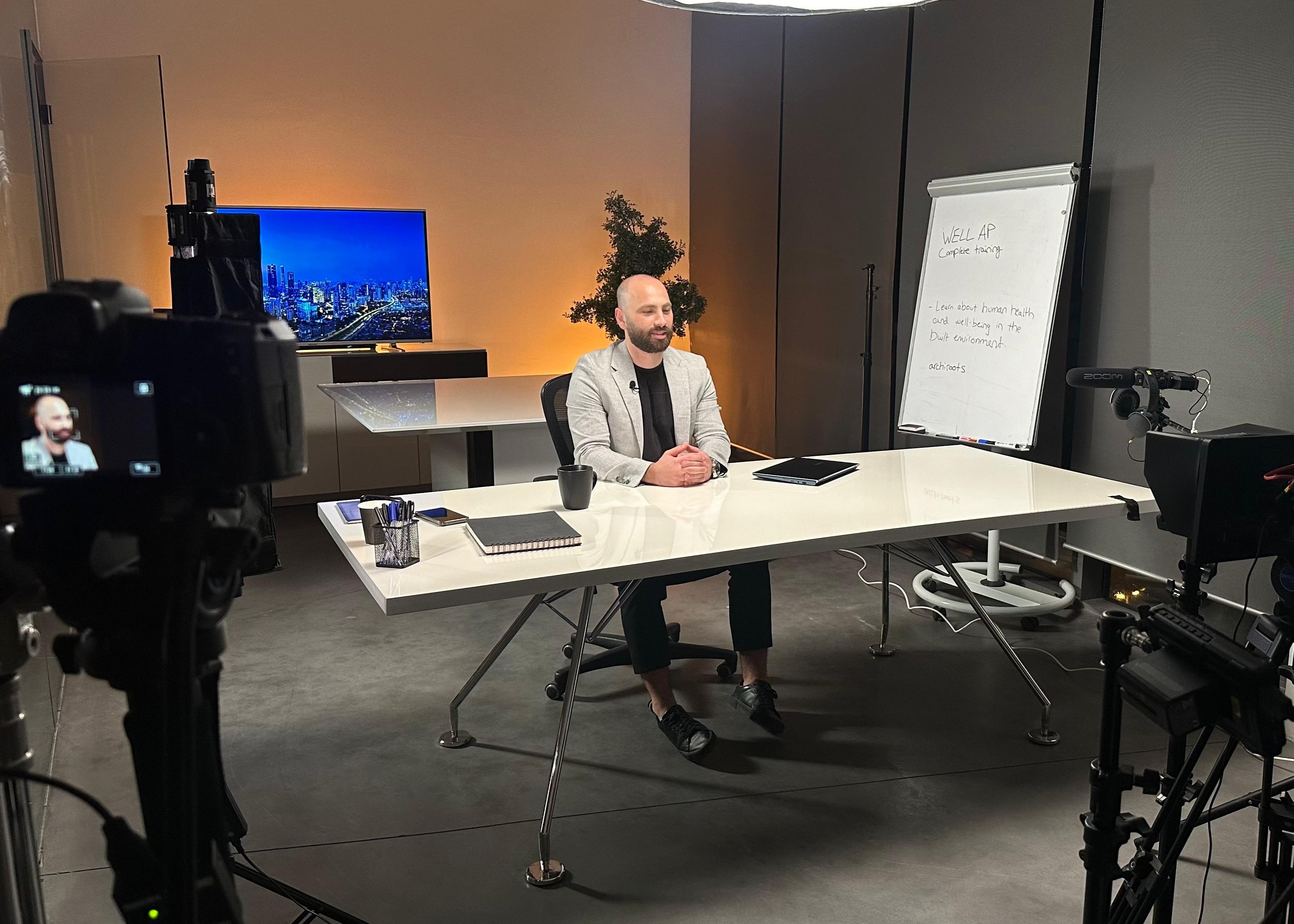
I’m expanding WELL education at Archiroots, pursuing WELL Faculty designation and continuing to partner with universities and institutions in the region to introduce students and professionals to healthy building principles early in their careers. My WELL AP credential is the foundation of all of it. It gives me the credibility to teach, the technical depth to keep course content accurate and membership in a global community I genuinely believe in.
Is there anything else you’d like to share?
Only gratitude. As a Cornerstone member of the WELL community, I’ve seen firsthand how supportive IWBI is of educators and advocates around the world. My mission with Archiroots has always been to make green building and healthy building credentials accessible to professionals everywhere, especially in regions underserved by traditional training. WELL has been a natural home for that mission, and I’m excited about what comes next.
Learn more about what it takes to become a WELL AP!